
In 2004, the U.S. Men’s Basketball Team, packed with NBA superstars, was expected to sweep the Athens Olympics. Instead, they stumbled–lost three games and settled for a bronze medal.
What went wrong?
Analysts and players pointed to the lack of teamwork—poor communication, fragile trust, and mismatched play styles undermined their performance. Despite having some of the most talented players in the world, their inability to work as a team turned potential triumph into disappointment.
No matter how skilled or resourceful individuals are, true success hinges on teamwork.
For leaders, fostering collaboration is not just a duty—it’s a critical factor in achieving goals. Without it, even the strongest teams can crumble under pressure.
But why do leaders still fail to achieve team collaboration and how to curb this issue at the beginning level before it escalates to project failures?
In this article, we’ll explore why team collaboration fails, backed by real-world historical examples. More importantly, we’ll provide actionable tips and industry best practices to help leaders address these challenges. By the end, you’ll not only understand the roots of collaboration breakdowns but also learn how to transform your team into a unified, high-performing force.
The importance of team collaboration
Imagine a product team working together seamlessly to launch a major app update ahead of schedule. Developers, testers, and designers communicate openly, share real-time feedback, and tackle roadblocks as a unit. The result? A bug-free release that delights customers and earns the company rave reviews. Organizations strive hard to harness a seamless team collaboration in the workplace to:
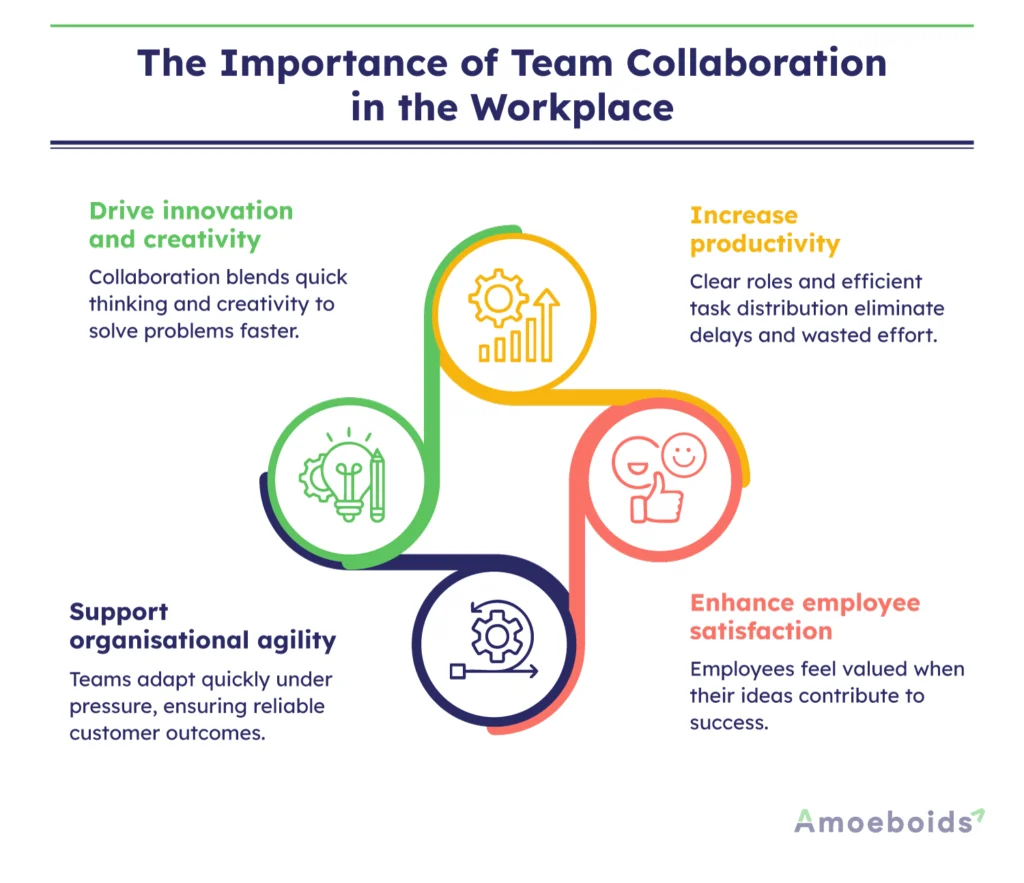
Drive innovation and creativity:
Team collaboration helps members blend their quick thinking with creativity to solve problems faster.
Increase productivity:
Tasks are handed out efficiently amongst all members. Clear roles mean no time wasted.
Enhance employee satisfaction:
Everyone contributes and sees their ideas implemented swiftly. When each member feels like a crucial part of the success, it boosts team morale.
Support organizational agility:
Quick adaptation to emergencies demonstrates the team’s ability to handle pressure and pivot fast, keeping the end customers happy and the service reliable.
This is the power of effective collaboration. It’s not just about getting along but getting ahead together. However, team collaboration doesn’t always go as planned despite these benefits.
Why team collaboration fails
1. Lack of clear goals and roles
It is very possible that members will have varied perspectives on the same agenda. Without clear roles or goals, confusion spreads, and progress stalls.
Who doesn’t know Nokia? However, Nokia’s downfall in the smartphone world is often attributed to internal dysfunction and a lack of trust among team members. Similarly, the Challenger disaster also highlighted organizational and trust issues at NASA, although primarily a technical failure.
2. Poor communication
Did you know during the Crimean War, the infamous Charge of the Light Brigade was a military disaster caused by poor communication?
Miscommunication and communication gaps are frequent issues in many teams. They most often lead to confusion, missed deadlines, and significant frustration among team members.
Let’s say a team is developing a new website feature. The project manager sends an email detailing task assignments, but it’s vague and open to interpretation. The developers assume one set of functionalities while the designers work on a different user interface. It’s normal to anticipate that the situation will lead to a mismatch, only to discover it in a team meeting days later.
3. Lack of trust among team members
A lack of trust in team members can lead to a toxic environment where blame and competition overshadow collaboration.
Let’s recap the classic case of merger conflict between Hewlett-Packard (HP) and Compaq in the early 2000s. Trust issues emerged between HP CEO Carly Fiorina and the company’s board, as well as between employees of the merged companies. The lack of trust started brewing significant internal conflicts and low employee morale, leading the company to a bad decision.
This is where building a foundation of trust becomes essential to ensure the long-term success of a company.
4. Ineffective leadership
Leaders who micromanage or fail to offer clear guidance can severely impede effective teamwork.
For instance, if the project leader insists on approving every minor detail before proceeding, it will slow down the team’s workflow. Eventually, this will frustrate team members and curb their creativity.
Instead, leaders should turn into coaches rather than commanders, like Phil Jackson did for the Chicago Bulls and Los Angeles Lakers and led them to multiple championships.
They should also be skilled in conflict resolution to resolve disputes within the team while fostering an environment of trust and respect. That’s when team members feel empowered to take initiative and innovate.
5. Incompatible tools or processes
If an organization depends on outdated or mismatched tools and processes, the output also suffers inefficiencies that frustrate teams.
Let’s say a team is using several disjointed tools for project management, communication, and documentation. If those tools can’t work in integration, information gets lost, tasks are duplicated, and the overall process is bogged down, making it hard to track progress and meet deadlines.
In this regard, it is important to integrate tools that aid your team in task management, team communication, and progress tracking in a unified space.
6. Lack of flexibility
Rigid processes without the flexibility for creativity can prevent teams from adapting to changing project needs, which ultimately impacts the project’s success.
In this regard, the role of an ideal leader is to encourage teams to adopt flexibility by allowing them to experiment and adjust their workflows as needed. This could mean adopting agile methodologies that permit iterative and incremental development. That enables teams to adapt their approach based on real-time feedback and evolving project requirements. SpaceX, under Elon Musk’s leadership, did exactly the same while developing the Falcon 9 rocket.
7. Overemphasis on individual performance
When individual achievements are highlighted over team success, it can create a competitive rather than collaborative environment. In a sales team, if only the top performers are rewarded, it may discourage team members from working together, sharing leads, or assisting each other.
That’s why the focus should shift to collective achievements. For example, bonuses or recognitions could be based on team targets or milestones achieved together, which would promote a collaborative culture that values shared success over individual glory.
8. Diversity without inclusion
The U.S. Civil Rights Movement, led by figures like Martin Luther King Jr., succeeded in large part due to its inclusive leadership. The movement united individuals from diverse racial, religious, and socio-economic backgrounds.
If you have a diverse team, that does not guarantee an effective collaboration.
Leaders must also prioritize inclusivity to harness the full potential of diversity. Otherwise, the lack of inclusivity can lead to disengagement and prevent the team from benefiting from the diverse perspectives they possess.
This could involve training on inclusivity and unconscious bias, setting up mentorship programs, and ensuring all voices are considered in decision-making processes.
Understanding the challenges that lead to failed team collaboration is the first step toward building a more cohesive and productive environment. Now that we’ve identified these common hurdles, it’s time to move from diagnosis to action.
How to fix collaboration challenges
A Deloitte survey found that teams who work in collaboration are 60% more innovative and perform 73% better at work. With such compelling benefits, it makes sense why organizations work so much on addressing their collaboration challenges. In this regard, let’s look at some practical strategies to enhance teamwork and streamline joint efforts.
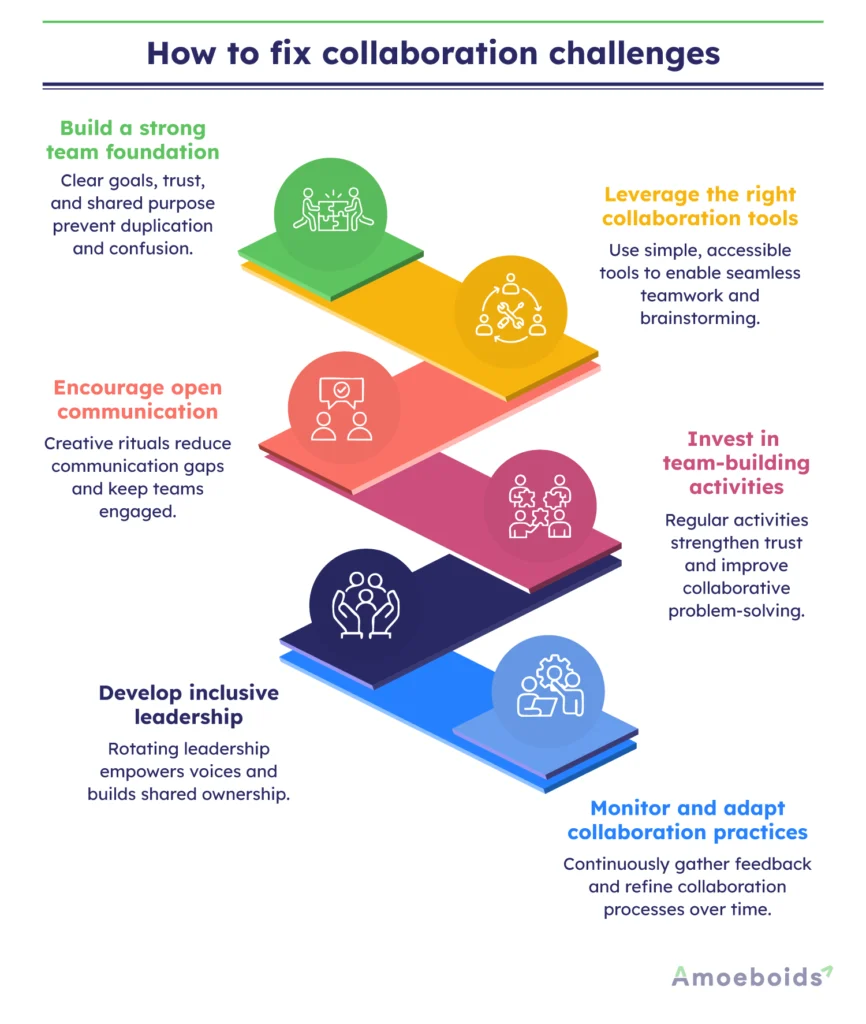
Build a strong team foundation
To build a strong collaboration, teams need clarity, trust, and shared vision. Otherwise, there will be duplicate efforts, and they might lose sight of larger goals. So, leaders must set clear goals and assign clear roles for every team member. Most importantly, align them with a common goal and a sense of purpose.
Leverage the right collaboration tools
The right collaboration tools can make all the difference. Platforms like Miro are great for brainstorming, Jira for keeping projects on track, and Zoom for virtual check-ins. Be sure the tools are easy to use and accessible for everyone on the team. Teams can also use remote team collaboration tools to simultaneously contribute ideas on a shared digital whiteboard during brainstorming sessions.
Encourage open communication
A study shows nearly 86% of employees and executives think workplace failures happen because of communication gaps. It’s imperative to bring some innovation into regular stand-ups, retrospectives, and feedback sessions to keep conversations flowing. For instance, you can introduce a “Start-Stop-Continue” activity where team members suggest what the team should start doing, stop doing, and continue doing. This will keep all members active and accountable to create a healthy collaborative environment.
Invest in team-building activities
Once a week, engage cross-functional teams in fun activities to build trust and strengthen bonds. For instance, one of your fun Fridays could be to engage teams in reverse brainstorming, where the team will identify the worst ways to achieve a team goal and then work together to flip those into actionable solutions.
Develop inclusive leadership
Let team members take turns to lead meetings. This will empower even quieter voices to shine and take a sense of ownership. To even make this process more helpful, assign meeting leads in advance and provide a template to guide their preparation.
Monitor and adapt collaboration practices
Collaboration isn’t a “set it and forget it” deal. Gather feedback regularly through surveys or one-on-ones and monitor metrics like project completion rates and employee satisfaction. Use what you learn to refine and improve your processes over time. For instance, an annual survey identifies that the team needs more creative freedom, prompting a revision in project management methodologies.
Moving to the next section, let’s explore these benefits in detail, solidifying why investing in effective teamwork is a win-win for all.
Benefits of successful collaboration
When teams effectively join forces, they unlock a host of benefits. However, the following four major benefits drive the organization forward toward success.
- Increased team efficiency and productivity: When everyone understands their role and collaborates effectively, tasks are completed faster and with better results.
- Higher innovation and creativity in projects: A team with diverse perspectives comes up with more innovative solutions that are hardly achievable by an individual.
- Enhanced employee morale and retention: A collaborative environment makes team members feel valued and satisfied with their work, leading to higher morale and reduced turnover.
- Improved ability to meet organizational goals and client needs: When teams work together, they quickly adapt to changes and effectively meet challenges to meet broader organizational goals and client expectations.
Conclusion
The bottom line is that if you want your team to succeed, collaboration has to be top-notch.
Collaboration brings together different ideas, and that’s where creativity breathes. You get new ideas, fresh approaches, and solutions that wouldn’t have come to life in isolation. However, it takes a lot of effort from leaders. From working on clear goals and the right tools to encouraging open communication and inclusive leadership, when leaders implement the strategies discussed above, the organization easily overcomes common collaboration challenges. Over time, a well-synced team collaboration leads to increased productivity, innovation, and heightened morale in the individuals.
Let’s work on these principles to transform team dynamics and drive the organization toward remarkable success.