
A well-drafted project status report is the backbone of smooth project execution. These reports are useful across different sectors and domains, from software development to construction management.
Moreover, effective project status reporting is the key to identifying issues early and taking prompt action. The status report covers not only recent accomplishments but also upcoming milestones. This helps set the right expectations and prepares stakeholders for future engagements with the project.
But how to create such a well-crafted status report?
This guide will teach you the essential elements of an effective project status report. You will also learn how to leverage tools and use best industry practices. Let’s dive in and explore the building blocks of impactful status reporting.
What is a project status report?
A project status report is the easiest way to share updates about a project. It helps track its progress, highlights risks or issues, and keeps everyone informed.
What does a project status report do?
- Track progress: It shows the progress of the project and what’s still pending.
- Highlight risks and issues: It flags any issue that needs immediate attention.
- Provide updates to stakeholders: Whether you’re a team member, manager or client, this ensures that everyone is involved and knows what’s happening in the project.
Some of the key benefits of using project status reports are:
- Better communication: Since everyone gets clear and consistent updates, it helps avoid confusion.
- Smarter decisions: Teams can make the right choices with the right information.
- Alignment: It helps align everyone on the same goals and expectations.
- Transparency: They update everyone – team members, managers, and clients – on progress.
- Risk management: Doing regular updates can help spot problems early, like delays or roadblocks, and offer ways to solve them before they become major issues.
- Accountability: By clearly defining roles and responsibilities, the importance of project status reports is that it helps the team stay focused and get their work done as planned.
- Efficiency: They help in the management of time and resources effectively, by making sure that the tasks are prioritized and the project stays on track.
- Improved trust: Regular updates build confidence among team members, stakeholders, and clients by showing progress and addressing concerns right away.
- Motivation: Seeing consistent progress in reports keeps the team motivated and focused on achieving their goals.
- Documentation: Status reports serve as a record of the project’s journey, useful for future planning, audits, or lessons learned.
In simple words, a project status report shows what’s happening in the project and keeps everyone on track.
Example of a project status report
Here’s an example of what a project reporting template might look like:
- Project name: Marketing Website Redesign
- Status: On Track (Everything is going as planned!)
- Progress: 60% complete (We’re more than halfway done!)
Key updates:
- We finished testing the homepage design with real users.
- We’ve started integrating the backend API (which is important for the website to work smoothly).
Risks:
- We might face a delay because the client is late in delivering the content we need.
Next steps:
- Our goal is to launch the homepage by February 2025
This format keeps everyone in the loop and ensures the project moves smoothly!
Now, let’s understand what elements to focus on to make project management reports more focused & useful.
Essential elements of a project status report
Let us take a look at the key parts every project status report should have, with real-life examples to make them easier to understand.

1. Project overview
It explains what the project is about in simple terms with details such as:
- Project name, objectives, and timeline
Example: “The ‘New Product Launch Project’ is focussed on releasing a new product by the end of 2025.”
- Key deliverables and milestones
Example: “We plan to finish the product prototype by February 2025 and launch the marketing campaign by May 2025.”
2. Progress summary
This section gives a quick snap of how the project is doing right now, highlighting the following details:
- Overall progress status
Example: “The project is currently on track with all tasks completed on schedule.”
- Percentage of completion
Example: “We’ve completed 60% of the project, with the design phase almost finished and development underway.”
3. Key updates
This part deals with the latest developments and the upcoming steps in the project. It comprises of:
- Milestones achieved so far
Example: “The product features have been defined, and the production timeline has been set.”
- Upcoming tasks or milestones
Example: “The next task is to test the prototype, and after that, we plan to start production by July 2024.”
4. Risks and issues
This section deals with identifying the potential problems and current obstacles. The key elements of status reporting are:
- Potential risks with mitigation strategies
Example: “One risk is the slow pace of the design phase. To avoid delays, we’re scheduling more frequent check-ins with the design team to ensure progress.”
- Current issues and their impact
Example: “We are experiencing issues with the new product’s packaging, which may delay production by two weeks unless resolved immediately.”
5. Budget overview
The budget overview keeps everyone informed about the financial health of the project with details, such as:
- Current spending vs. budgeted amount
Example: “Currently, we’ve spent $18,000 of the $45,000 allocated for the product launch campaign.”
- Variance analysis
Example: “We spent $4,000 more on promotions, but we saved an equal amount on product development, so it’s still within budget.”
6. Timeline and deadlines
Your project status report must keep track of any changes to update the schedule. Consider incorporating the following details:
- Updated project schedule
Example: “The launch event scheduled for October 2025 earlier has now been rescheduled to November 2025 due to delays in manufacturing.”
- Changes to key deadlines
Example: “The marketing campaign launch has been moved to July 2025 from June 2025 to accommodate final product testing.”
7. Team updates
The team update shared updates about the people involved and their performance as in:
- Resource allocation
Example: “John, the senior developer, will focus more on coding, while Sarah takes the responsibility of product promotion.”
- Team availability and performance highlights
Example: “Sarah has been performing exceptionally well in the product promotion and has finished preparing the product descriptions for the website ahead of schedule.”
8. Next steps
This section briefly talks about the agendas for the future. It includes:
- Actionable items for the upcoming period
Example: “In the coming weeks, we will begin finalizing the product design, initiate the first round of customer feedback, and start assembling the launch team for December 2025.”
Now that you know what information to focus on during project status report preparation, let’s understand how frequently you should organize it according to the different stages of your project development.
Types of project status reports
Project status reports come in different forms. Each report helps you keep track of different stages & is geared towards different audiences. Let’s take a look at the four most common types:
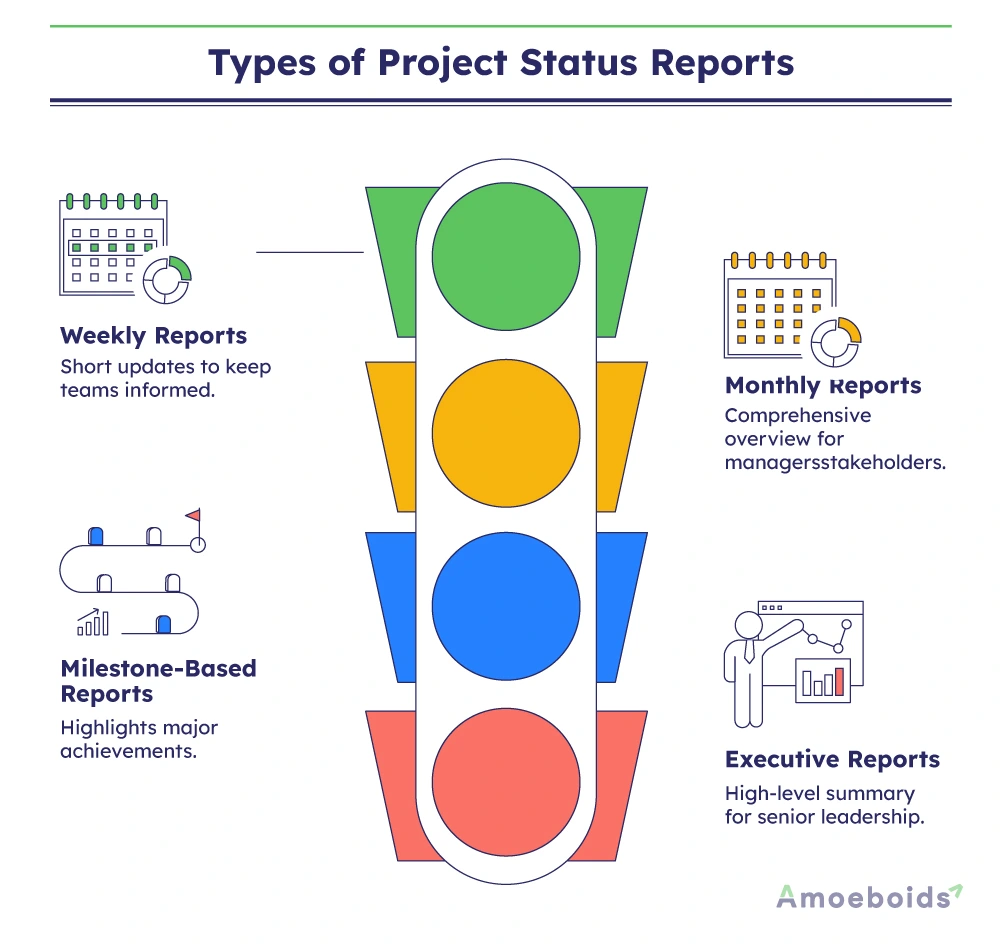
Weekly status report
A short update that is shared every week to keep everyone in the team, well informed about the project’s progress. Depending on the needs, this could be a bit more detailed with about 2-3 pages of information.
Example: “This week, we finished designing the first draft of the new product packaging, and next, we’ll begin the testing phase.”
Monthly status report
Shared with managers or stakeholders that provides a larger picture of the project and covers all the key achievements, challenges, as well as what’s planned for the coming month. Can go in depth & potentially can have multiple pages.
Example: “This month, we completed the product development phase and are now preparing for the product launch in December 2025.”
Milestone-based report
created after achieving a major milestone in the project that prioritises the completed milestone and what’s coming up next in the process
Example: “The first product prototype is ready, and testing will begin soon.”
Executive report
For senior leadership, summarizing the most important updates like key achievements, risks, and timelines
Example: “The project is on track for December 2025, with no major risks identified.”
Each type of project status report serves a unique purpose, helping everyone involved stay informed at the right level of detail.
Best practices for writing project status reports
Preparing a project status report is all about making it simple and helpful.
- Keep it concise: The project managers should use bullet points and avoid writing long paragraphs.
- Focus on actionable insights: Highlight the completed tasks, the upcoming ones, and issues, if any.
- Use visuals: Use charts and graphs to help understand the report easily.
- Be transparent: Let everyone know about any potential risks, delays or challenges that need immediate attention.
- Tailor for your audience: For senior leaders, give a brief overview, while for the team members, provide more specifics like tasks to do, timelines, and what needs to be done next.
Following these tips, your project status reports will be clear, effective, and keep the team focused.
Tools for creating project status reports
Here are some popular tools to help you create effective project status reports:
- Jira: Perfect for Agile teams to keep track of progress and stay on schedule.
- Trello: A simple tool for smaller projects, making status updates easy.
- Asana: Helps with task updates and keeping track of important deadlines.
- Microsoft Project: Great for advanced project tracking and detailed reporting.
- Confluence: A place to store and share all your project reports in one spot.
These tools make project reporting easier and more organized!
The bottom line
Behind every successful project is a system of regular updates, and project status reports play an important role. These reports help teams stay on track by summarizing what’s completed and coming up next in the planning. They also identify potential risks or delays, allowing the team to plan solutions beforehand.
Status reports give stakeholders a transparent view of the project, building trust and reducing uncertainty. When tailored for specific audiences, these reports ensure everyone gets the necessary information without unnecessary details. They’re also an opportunity to celebrate progress and keep the team motivated. With a well-prepared status report, you can navigate any project confidently.
FAQs
What is the purpose of a project status report?
A project status report is a document that allows the shareholders to monitor the project’s progress and direction. It includes details about progress, risks, and other important information.
What are the essential elements to include in a status report?
Three elements are essential for project management reports: project goals, important tasks, and timeline. The reports should also highlight the progress made, any risks or issues, and updates on the budget or deadlines.
How often should project status reports be prepared?
It depends on the project requirements and the people involved. Depending on that, the reports can be prepared weekly, monthly, or at key project milestones.
What tools can help streamline project status reporting?
Tools like Trello, Asana, Microsoft Project, and Confluence simplify project status reporting. They help follow the progress and keep everyone updated, from the team to the stakeholders.
How do you handle reporting delays or risks effectively?
To effectively handle risks or delays, it is very important to be honest and open with the team and stakeholders about them. Being transparent about potential risks can help you fix them without affecting the deadline.