Imagine your company has to deliver a new marketing tool that needs to be deployed on the website in 3 months to improve sales. There are multiple teams to align, deadlines to manage, and only an abstract idea that needs to become a reality. That’s where the need for product management becomes imperative. Your team lead needs the one person with all the skills to deliver the product on time: the product manager.
The need for product management exists in every company and bridges the gap between business strategy and technical execution. Companies might face fragmented communication, missed deadlines, and poorly defined objectives without a product manager. Teams can end up working in silos, leading to a misaligned product that fails to meet business goals or user needs.
In this blog, we will understand the importance of product management and what it takes to become an ideal product manager.
What is product management?
Product management, through its lifecycle, refers to the entire set of actions, from the product vision to launch to new version releases, that are managed by the PM. Strong product management practices help businesses increase market share by delivering products users love and improving customer satisfaction with a focus on quality and user experience. That, ultimately, boosts revenue, profitability, and growth.
In this regard, product managers (PMs) are the connection between business strategy and product execution. They acknowledge product management’s importance. Therefore, their responsibilities focus on delivering successful products that meet customer needs and business objectives.
Key responsibilities of a product manager
Product managers need to integrate the company vision for a product, the different teams to deliver it, and a strong understanding of user behavior.
Their responsibilities include but are not limited to:
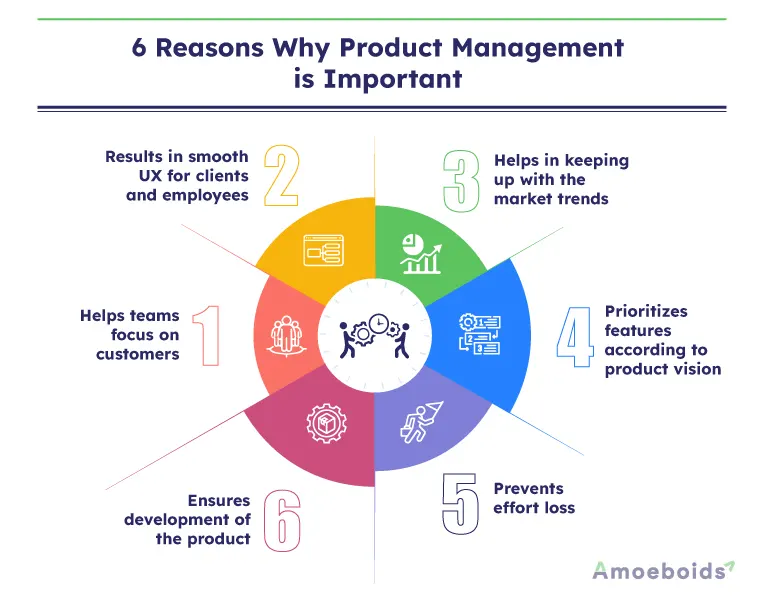
- Defining product vision and strategy: Your primary job as a PM is to help articulate the product’s purpose and goals and build a product roadmap for development with key milestones
- Conducting market and user research to identify new opportunities: As a PM, you must work from first principles and understand customer needs, pain points, and behaviors.
- Prioritizing product features: It involves translating user needs into actionable product requirements and prioritizing features based on their value to customers and the business.
- Collaborating with cross-functional teams: Product managers work closely with engineering, design, marketing, and sales teams to ensure alignment and smooth execution.
- Monitoring product performance and driving iterations: Once the product is launched, the PM continues to monitor product performance, gather customer feedback, and make necessary adjustments based on data and insights.
The Release Planning & Reports app for Jira by Amoeboids makes product planning and report generation easy. The app integrates with JIRA and lets you easily make version changes and notes. The data insights also help PMs decide on features and approaches for the next version.
Significance of product management in the product lifecycle
Key reasons why product management is important through the product lifecycle are:
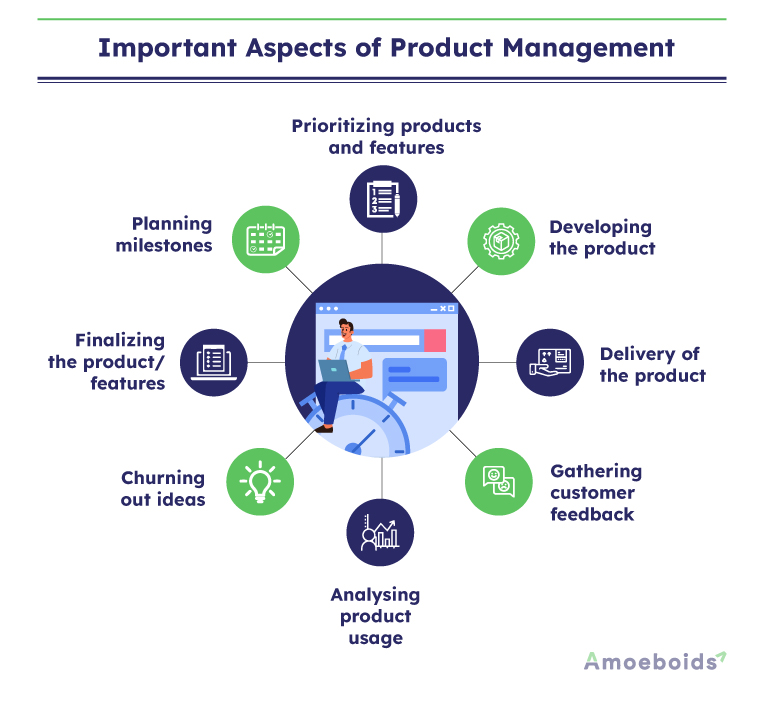
- Identifying market needs and crafting a clear vision: Having a clear plan ensures the product solves real problems and fits customer needs
- Coordinating teams and prioritizing tasks: To keep the focus on what is most important so that everyone works efficiently and on time
- Ensuring a successful market launch: To ensure the product is ready, looks good, and is promoted properly to attract attention
- Improving features based on user feedback: Incorporating users’ feedback to fix problems, add new features, and make the product better over time
- Phasing out products responsibly: Acknowledging when it’s time to stop selling a product, offering alternatives, and making sure the transition causes as little trouble as possible
Why is product management important?
There are several moving parts to bringing a feature or product to market. From changing market trends to managing teams, the need for product management is clear. Here are five factors that highlight product management importance:
- Aligns business goals with customer needs: Product managers act as the voice of the customer, ensuring that every decision reflects both organizational objectives and user needs
- Drives product success: PMs guide the development process towards achieving key milestones by defining a clear product vision and roadmap.
- Enhances collaboration across teams: PMs act as a bridge between engineering, design, marketing, and sales teams, fostering effective communication and collaboration.
- Reduces product failure risks: Through rigorous market research and user feedback, product managers identify and mitigate potential risks, ensuring the product meets market demands.
- Maximizes ROI: Product managers help maximize the return on investment for development efforts by prioritizing features based on value and impact.
Key benefits of effective product management
From improved speed of delivery to better quality products to customer retention, here are some ways in which the significance of product management is felt in companies.
- Clear product direction and strategy: Helps teams avoid wasting time and resources on unimportant tasks and stay focused on projects that bring the most value.
- Improved time-to-market for new features and products: Faster time-to-market affects revenue, customer satisfaction, and market share.
- Better customer satisfaction and retention: Positive user experiences and satisfied customers lead to increased customer retention and positive word-of-mouth referrals.
- Increased organizational efficiency and focus: Product managers reduce internal friction, minimize effort, and deliver high-quality products by establishing clear processes, prioritizing tasks, and facilitating team communication.
- Competitive advantage through innovation: Companies can maintain a competitive edge and differentiate their products by encouraging experimentation, gathering customer feedback, and iterating quickly.
The importance of product management can be felt when it delivers these key benefits for organizations. But how does product management impact each team it needs to work with?
Need of product management for impactful teamwork
Product managers thread the needle for the different teams that work together. They understand each team’s constraints to develop a plan that maximizes productivity and efficiency while keeping the end goal in mind. PMs interact with different teams to:
Deliver clarity for engineering teams
PMs act as a bridge between the business side and the engineering team, keeping development efforts focused by clearly understanding what needs to be built and why.
For instance, if the team builds a mobile app for food delivery, the PM ensures they stick to the initial goal of creating a simple ordering and payment system instead of adding complex features like live delivery tracking or meal customization, which can be introduced in later iterations.
Determine product value and user insight for marketing teams:
PMs analyze customer needs and market trends to guide better in building marketing campaigns and optimize customer acquisition strategies for successful product launches.
For instance, when launching a fitness app, a PM might identify that busy professionals value quick, effective workouts and might like messages like “Get fit in just 15 minutes a day.” This strategy would help coordinate a social media campaign targeting this audience.
Boost growth strategies for sales teams
Product managers create sales talk tracks to address customer inquiries or technical questions during the sales process. They also help the sales team to tailor their sales pitches and demos for customized experiences.
Imagine you’re a PM for a project management tool. A sales rep comes to you saying prospects often ask, “How does this integrate with Slack?” You could create a simple talk track explaining the seamless integration and even design a quick demo to show how tasks auto-sync with Slack channels. This would help the sales rep make the sales pitch more compelling and relatable.
Address issues with the customer support team
Product managers understand the product inside out and can help the customer support team address user concerns effectively.
For example, if several customers report that a new feature isn’t working properly, the product manager steps in to help. They work with the support team to find patterns in the complaints, investigate the issue with the engineering team, and provide a clear solution and timeline. This helps the support team communicate the fix to customers in a timely and accurate way.
This sort of inter-team collaboration shows the need of product management to ensure that the product is developed, launched, and supported.
The significance of product management in business growth
Product managers prioritize understanding business strategy and fulfilling customer needs. As the business expands and the product matures, the role diversifies to accommodate more facets of the business.
There are four ways in which the need for product management evolves with business growth.
To drive customer-centric innovation
PMs can curate innovation to increase user satisfaction, loyalty, and a stronger competitive advantage. For instance, a PM’s golden decision to add a “dark mode” feature based on user requests might increase user satisfaction.
To ensure scalability
PMs can create the base for scalability to handle high product demand, a larger volume of data, and a growing user base without significant technical challenges or performance loss.
For instance, a PM’s strategic decision to migrate a growing e-commerce platform to a cloud-based infrastructure could ensure seamless performance during peak sales seasons, like Black Friday, without crashes or slowdowns.
Unlocking new opportunities
PMs are responsible for maintaining the business’s competitive edge. They brainstorm through product expansion, diversification, and creating an entirely new product line using emerging technologies.
A CRM company managed by an ideal PM can possibly develop an AI-led predictive lead-scoring feature to offer more sophisticated sales intelligence, which can take its business to a new height.
Balancing short- and long-term goals for sustainable growth
A well-experienced PM can advise the company on how to keep the product competitive and successful while meeting the immediate needs of the business.
For instance, imagine guiding a cloud-based storage provider to balance its short-term goal of enhancing file upload speeds with its long-term vision of pioneering edge computing technology. The PM could prioritize incremental improvements to file uploads while allocating resources to R&D, ensuring neither productivity nor innovation is compromised.
5 key skills to be a successful product manager
As you can see, product managers have to wear several hats and manage disparate teams and scenarios. They bring a very specific set of traits and skills to the table. But here are some skills that make product managers successful:
- Strategic thinking and vision: Long-term vision, anticipating market trends, and developing a compelling product vision aligned with overall business strategy
- Strong communication and leadership skills: Clearly articulates product vision, synthesizes feedback, and communicates with cross-functional teams (engineering, design, marketing, sales)
- Data-driven decision-making: Analyze user behavior, track key metrics, use data to prioritize features and measure product performance.
- Empathy for customers and cross-functional teams: Understand customer needs while also managing internal resources’ time and effort
- Adaptability to change: Comfort with ambiguity and unexpected challenges
By cultivating these skills and traits, PMs can drive successful product launches and contribute to the growth and success of their organizations.
Get on the growth path with effective product management
In today’s tech-driven world, product management is essential. It connects teams like engineering, marketing, and customer support, ensuring everyone is aligned with the company’s goals and vision.
A good product management process simplifies workflows, boosts collaboration, and ensures products are delivered on time. With the right tools, like JIRA, product management becomes even more efficient, helping teams stay organized and focused on what truly matters—delivering value to customers.
If you want to build better products, meet deadlines, and stay ahead of the competition, it’s time to invest in a powerful product management tool. Start today and see the difference it can make!
Like to learn more about product management best practices? Create versatile roadmaps and automate your releases with Amoeboid’s Roadmap Portal and Automated Release Notes & Reports App for Jira.
FAQs
What is product management, and why does it matter?
Product management oversees a product’s lifecycle, from ideation to launch. It identifies customer needs, defines product vision, gathers requirements and collaborates with cross-functional teams. It matters because it drives innovation, collaboration, and business growth.
How does product management contribute to business success?
Product management increases revenue and profitability, improves market share, builds customer loyalty, and creates new growth opportunities by aligning organizational goals with user expectations.
What are the key responsibilities of a product manager?
Product managers define the product’s vision and strategy, conduct research, prioritize features, collaborate with teams, and monitor product performance throughout its lifecycle.
How does product management impact different teams in a company?
It bridges gaps between teams, providing clear guidance and ensuring alignment. It reduces scope creep and provides requirements for engineering, aligns product positioning and messaging for marketing, provides tools and knowledge to sell the product and helps address user pain points for customer support.
What skills are essential for product managers?
Key skills for PMs include strategic thinking and vision, communication and leadership, data-driven decision-making, empathy, and adaptability.