
Imagine you’re a project manager tasked with leading a cross-functional team to launch a new product. You have a wealth of inputs—market research, stakeholder feedback, resource availability—but organizing them into a clear plan feels like juggling too many priorities at once. The timelines are tight, expectations are high, and you’re stuck wondering how to align everyone on the same page.
Enter the roadmap growth strategy—your ultimate playbook for turning big-picture goals into actionable steps. With clearly defined milestones, resource allocation plans, and risk management strategies, you lead your team with focus and confidence. This approach ensures every task contributes to the overarching business objectives.
In this article, we’ll explore the importance of a growth strategy roadmap, its essential components, and practical steps to create one. It will empower you to steer projects toward meaningful outcomes.
What is a Roadmap Growth Strategy, and Why is it Essential for Business Success?
A roadmap growth strategy is a structured plan that breaks down long-term goals into actionable steps, ensuring alignment between an organization’s vision and execution. By setting priorities, allocating resources, and defining timelines, it bridges the gap between strategic aspirations and measurable achievements. Unlike a business plan focusing on operational details, a roadmap emphasizes high-level objectives and the steps required to achieve them.
For example, consider a startup looking to expand into a new market. While a business plan might detail logistical elements like supplier contracts or hiring plans, a roadmap addresses broader goals such as market entry strategy, product positioning, and growth milestones. It provides directional clarity, enabling teams to focus on what matters most.
A growth roadmap is critical for success because it serves as a blueprint for navigating complex challenges and achieving sustainable progress. Translating strategic goals into actionable steps aligns efforts with long-term objectives and provides a clear framework for decision-making. It prioritizes key tasks, allocates resources effectively, and identifies opportunities and risks, allowing businesses to optimize performance and adapt to changes. Ultimately, a well-crafted roadmap turns vision into reality by offering clarity, focus, and flexibility throughout the growth journey.
What Makes a Roadmap Growth Strategy Work: Key Components to Include
A successful growth strategy roadmap is built on six core components, each playing a vital role in guiding your business toward its objectives:
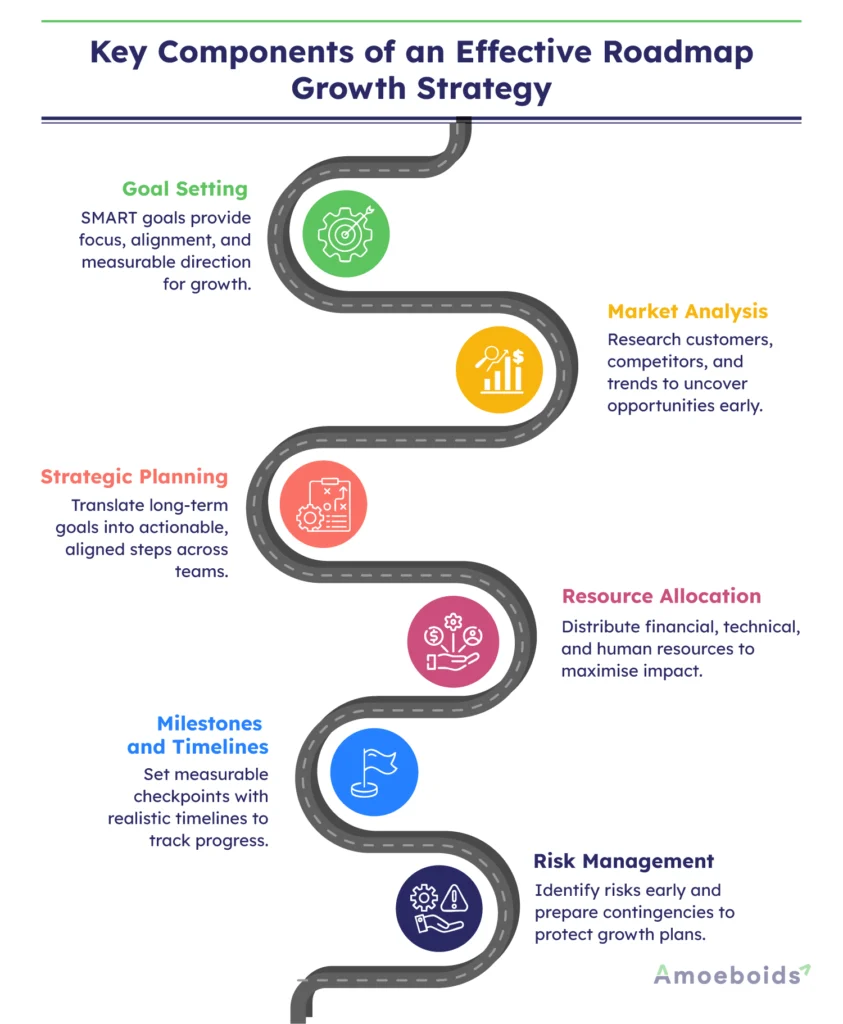
1. Goal Setting
Establishing SMART goals (Specific, Measurable, Achievable, Relevant, Time-bound) provides a clear direction for your growth strategy. Without clear goals, teams may waste resources on unaligned activities or lose focus.
For example, rather than aiming to “increase revenue,” a SMART goal would be to “increase quarterly revenue by 15% within the next year through expanded product offerings.”
2. Market Analysis
This involves researching customer needs, competitor strategies, and emerging trends. A deep market understanding helps businesses position themselves effectively and anticipate opportunities and changes, staying ahead of competitors.
For instance, analyzing feedback might reveal unmet customer demands that can shape your product or service offering.
3. Strategic Planning
Strategic planning transforms big-picture goals into actionable steps by using insights from market analysis and aligning them with your business vision. This ensures that every step taken contributes to the overarching objectives.
For example, if expanding into new regions is a goal, strategic planning defines how—whether through partnerships, hiring local teams, or adjusting pricing models.
4. Resource Allocation
Determining and effectively distributing the required financial, technological, and human resources is crucial. Poor allocation can stall progress or strain critical areas, while efficient use of resources maximizes impact and minimizes waste.
For instance, allocating funds to key marketing initiatives or training programs ensures resources are used where they generate the most value.
5. Milestones and Timelines
Breaking the roadmap into manageable milestones with realistic timelines ensures that teams can track progress and maintain momentum. Milestones provide measurable checkpoints that keep projects on track, improve accountability, and celebrate achievements to boost morale.
For example, a milestone could be launching a pilot program within six months before a full-scale rollout.
6. Risk Management
Proactively identifying potential operational, financial, or market-based risks and developing contingency plans are essential. Risk management minimizes disruptions, enabling businesses to navigate uncertainties while staying aligned with growth objectives.
For instance, having a backup supplier in case of disruptions or hedging currency risks when expanding internationally.
Each component is a puzzle piece, forming a cohesive and resilient growth strategy. By integrating these elements effectively, businesses can achieve sustainable growth while minimizing obstacles and surprises. Now that you’ve understood the key components to include in your roadmap, let’s go ahead and create one!
Building a Roadmap for Growth Strategy: Essential Steps and Overcoming Challenges
Creating a successful growth strategy roadmap involves a series of essential steps that ensure alignment with business goals while addressing potential challenges along the way.
Step 1. Define Clear Business Goals
Start by identifying specific, measurable, and long-term objectives aligning with your company’s vision. This step is crucial as it lays the foundation for your roadmap and offers a clear direction.
However, businesses often struggle with setting ambitious and achievable goals. To overcome this challenge, focus on SMART goals—specific, measurable, achievable, relevant, and time-bound—ensuring they are aligned with your mission and vision.
Step 2. Analyze Current Situation and Market Landscape
Next, evaluate your business’s strengths, weaknesses, opportunities, and threats (SWOT) while assessing market dynamics and trends. This step allows you to identify potential challenges and areas of opportunity.
One common challenge here is the unpredictable nature of market trends. To address this, ensure you conduct regular market research and stay agile, adjusting your strategy as necessary.
Step 3. Prioritize Key Initiatives
With a clear understanding of your goals and the market, focus on high-impact initiatives that will drive growth. Prioritization helps direct resources to where they can make the most significant impact.
A challenge in this phase is limited resources—whether financial or human. The solution is to identify quick wins that provide high returns on investment and build momentum for more extensive efforts.
Step 4. Set a Timeline and Milestones
Breaking initiatives into smaller, manageable tasks and setting realistic timelines is vital for maintaining progress. Milestones act as checkpoints to track performance.
Businesses often face challenges with unrealistic deadlines, leading to frustration and burnout. To mitigate this, set achievable milestones and review timelines regularly, adjusting as necessary based on team capabilities and external factors.
Step 5. Allocate Resources and Assign Responsibilities
Determining what human, financial, or technological resources are needed and assigning clear responsibilities is crucial for effective execution.
A common roadblock here is misalignment across teams. To overcome this, cross-functional collaboration can be fostered by holding regular alignment meetings and setting shared objectives.
Step 6. Review, Adjust, and Update Regularly
A successful roadmap is not static. Continuously monitoring progress and adjusting based on performance and feedback ensures your strategy remains relevant and effective.
The challenge of tracking progress can be addressed by establishing key performance indicators (KPIs) and celebrating small wins to maintain momentum toward larger goals.
By following these steps while proactively addressing common challenges, businesses can create a growth roadmap strategy that aligns strategy with execution, driving sustained success.
Tools to Support Your Growth Roadmap Strategy
Leveraging the right tools is crucial when managing and executing a growth strategy. These tools can streamline processes, improve collaboration, and enhance your ability to track progress:
- Project Management Software: Tools like Asana or Trello help you organize tasks, allocate resources, and track team progress. This ensures that everyone is aligned and tasks are completed on time.
- Analytics Platforms: Google Analytics or Tableau provide crucial data-driven insights that help you measure performance and refine strategies, ensuring you’re always on track to meet your objectives.
- Collaboration Software: Platforms such as Slack or Microsoft Teams foster smooth communication, helping teams stay in sync, exchange updates, and share feedback in real time.
In addition, Jira Service Management excels in managing workflows, service requests, and incident tracking. It allows for seamless team collaboration, ensures that any operational hurdles are addressed efficiently, and integrates with other tools to provide a comprehensive solution for tracking project progress and customer service initiatives.
Additionally, Amoeboid’s Roadmap & Idea Portal for JSM enhances Jira’s capabilities by integrating strategy evaluation, idea management, and roadmap tracking into one platform. This enables you to continuously monitor the effectiveness of your strategies and adjust them accordingly.
The Importance of a Growth Strategy Roadmap
In today’s competitive landscape, businesses that succeed are those with a clear direction and the agility to adapt. A growth roadmap strategy provides this clarity as a compass for navigating uncertainty and driving sustained success.
By outlining the journey from vision to execution, it transforms goals from abstract ideas into measurable achievements. Whether you’re scaling a startup or optimizing operations within an established company, a roadmap is your blueprint for success—ensuring every effort aligns with your broader objectives.
As the saying goes, “A goal without a plan is just a wish.” A growth roadmap strategy ensures your goals are more than just aspirations—they’re realities waiting to happen.