
What’s the one thing that can derail even the best-laid product plans? Poor project execution. You can have clear user stories and a strong team, but if the execution fails, deadlines get missed, and priorities fall apart. A 2023 PMI report states that only 58% of projects are completed within their original budget, and just 51% are finished on time.
On the other hand, when project execution is done well, teams deliver faster, adapt quickly to changes, and no rework is needed. It brings clarity to roles and helps teams focus on essential things, such as shipping value to users, sprint after sprint.
The truth is, most product managers and team leads don’t struggle with strategy; they struggle with turning plans into action. Hence, understanding what project execution entails and how it works is crucial.
In this guide, you’ll learn what effective project execution looks like, how to build a project execution strategy, and which project execution activities might work for you. You’ll walk away with fundamental techniques to fix what’s not working and keep your teams shipping fast and often.
What is project execution?
Project execution is the phase where plans meet reality. As Agile expert Seth Godin once put it:
“There’s no shortage of remarkable ideas, what’s missing is the will to execute them.”
That quote hits the core truth; ideas are easy to come by. Execution is where most projects stumble. From allocating the right developers to ensuring user stories flow through the sprint backlog, this stage demands discipline and clarity.
To explain project execution, think of it as the engine of your Agile journey. It involves coordinating project execution activities, such as daily stand-ups and sprint reviews, to ensure that every story is progressing. In this role, the project execution plan becomes your playbook. It maps who does what, when, and how success will be measured.
In short, project execution is the engine room. It’s where your strategy and planning pay off or get stalled.
Why is project execution important?
A company prioritizes project execution to meet goals that directly impact performance consistently. Organizations with mature project management capabilities reach their targets 77% of the time, compared to far lower rates for those without that discipline.
That edge translates into faster product release and stronger team morale, especially in Agile environments.
Contrast that with teams that neglect execution. They may still plan meticulously, but missed deadlines and ballooning budgets become routine. Projects stall, rework mounts, and stakeholders lose confidence. Companies that struggle here often see 12% of their resources wasted due to ineffective execution practices.
An execution strategy in project management helps teams stay focused on priorities while adapting to changing business needs.
The takeaway is clear: mastering project execution activities isn’t optional. It’s the difference between average and exceptional performance in current markets.
Project Execution vs. Project Planning
Teams need to figure out what needs to be done and how it will be done before a project produces outcomes. Here’s where project management comes into the picture. Once the plan is approved, it’s all about doing the work, aligning resources, and monitoring progress to stay on track.
Planning gives you direction. Execution gives you results. An effective execution strategy in project management ensures both phases work together to achieve project goals.
| Aspects | Project Execution | Project Planning |
| Purpose | Establishes project goals, scope, timelines, and resources. | Implement plans and deliver project outcomes. |
| Focus | Determines what should be done, how, and when. | Performs tasks and manages daily project activities. |
| Key Activities | Scope definition, scheduling, budgeting, risk management, and resource allocation. | Task completion, team coordination, quality assurance, and problem resolution. |
| Resource & Risk Management | Allocates resources and develops risk mitigation strategies. | Using resources effectively and responding to risks as they occur. |
| Deliverables | Project charter, schedule, budget, and risk management plan. | Deliverables, status reports, and final project outputs have all been completed. |
| Outcome | Provides a roadmap for successful project delivery. | Executes and delivers projects to meet their goals. |
Key stages of the execution process
Once the planning’s done, the project execution phase kicks in. This is where your team moves from “what should we do” to “let’s get it done.” Here’s what that typically looks like:
Stage 1 – Kick things off
Get everyone on the same page. Set expectations. Confirm roles. Ensure that people truly understand the “why” behind your work, rather than just the list of tasks. This step sets the tone for everything that follows.
Stage 2 – Start building
User stories move into sprints. Tasks get assigned. People start building, testing, writing, and fixing. It’s where progress becomes visible and where most blockers first show up. That’s why daily stand-ups and asynchronous check-ins must be executed precisely.
Stage 3 – Track what’s happening
It’s not just about watching a burndown chart. It’s about knowing when something is off early enough to fix it. That means monitoring work in real time and encouraging the team to speak up before things go wrong.
Stage 4 – Wrap and reflect
At the end of each sprint or milestone, analyse. Did you hit your target? What slowed things down? What should change next time? Most teams rush with this step, but it’s where all the learning happens.
Let’s look at a real-world project execution strategy example:
Take a small Agile product team rolling out a new onboarding feature for a fintech app.
Step 1 – During the kickoff, they clarify why user retention is tied to this feature and how success will be measured.
Step 2 – In Sprint 1, they build the front-end flow and basic logic.
Step 3 – By week two, blockers appear, and some integration APIs aren’t documented. They catch it early in a daily stand-up, escalate it, and solve it before it causes a delay.
Step 4 – In their sprint retrospective, they realize the dev team wasn’t looped in soon enough on third-party dependencies. That insight shapes how they prep for the next release.
This project execution strategy example highlights how proactive communication, early risk identification, and continuous improvement can strengthen project delivery.
These project execution steps help teams identify issues early, adapt quickly, and maintain momentum throughout the project lifecycle.
This process isn’t just theory. Teams that follow it end up learning faster, adjusting more effectively, and delivering better results.
But even with a solid rhythm, things go sideways. Let’s look at where execution tends to break down and what to do when it does.
Key Components of a Project Execution Strategy
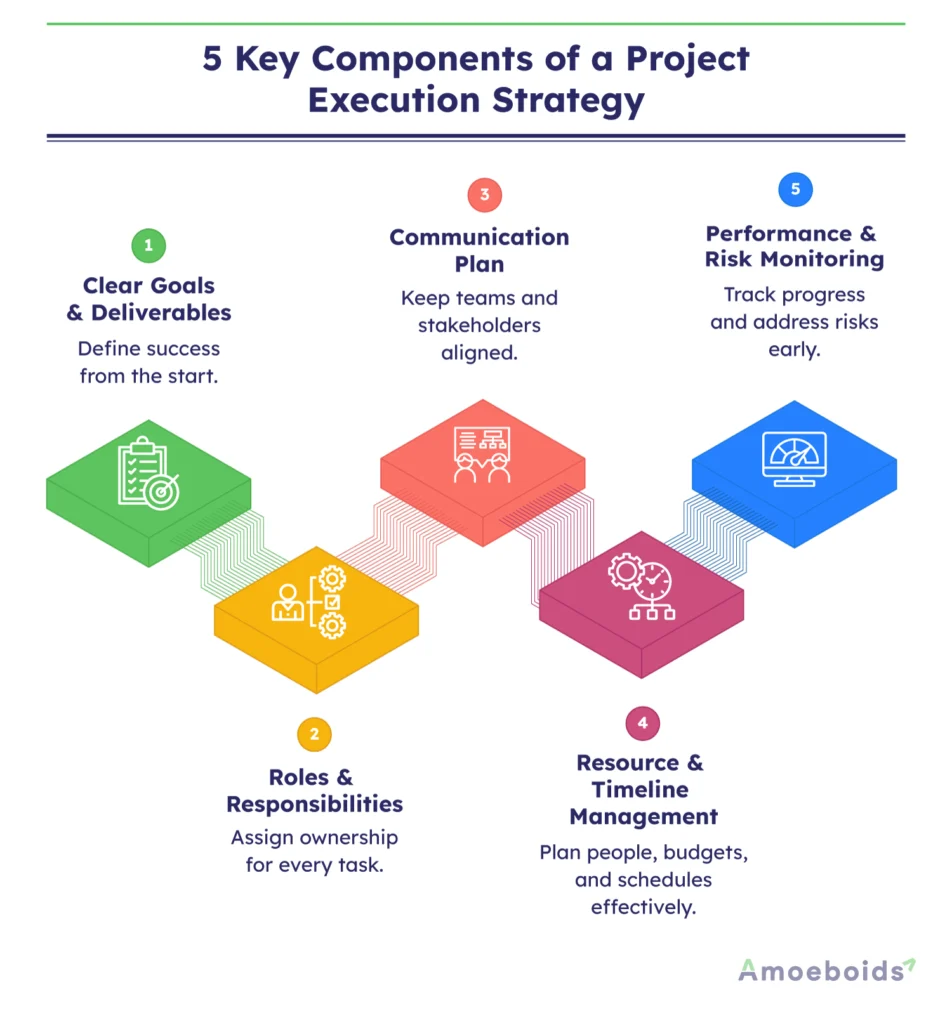
A clear project execution strategy helps to turn plans into outcomes. It keeps teams aligned, makes the most of resources, and helps surface possible roadblocks promptly, preventing them from derailing the project.
Clear Goals and Deliverables:
Every team member should know what success looks like. Clearly defined goals and deliverables provide direction, reduce confusion, and allow everyone to concentrate on doing the right thing at the right moment.
Defined Roles and Responsibilities:
Projects run smoother when everyone knows what they’re responsible for. Simply assigning tasks will make teams more accountable, prevent duplication of efforts, and boost collaboration throughout the project lifecycle.
Effective Communication Plan:
Regular communication keeps stakeholders updated and teams connected. Consistent updates, feedback loops, and open discussions all help with problem resolution and project progress.
Resource and Timeline Management:
Success is having the right people, tools, and budget available when they’re needed. Proper resource planning and realistic timelines help to avoid delays and keep work on track.
Performance Monitoring and Risk Management:
Tracking progress helps teams see potential problems before they become major hurdles. Regular monitoring, combined with proactive risk management, ensures that projects stay on track and align with goals.
What is a Project Execution Plan?
A project execution plan is a blueprint that guides a project from start to finish. It describes how the work will be done, who will do it, and how to measure project progress to successfully complete the project goals.
Effective project execution plan construction ensures every stakeholder understands how work will be completed and measured.
A typical project execution plan example includes project goals, timelines, resource allocation, communication plans, and risk management processes. An example of project execution plan may also include sprint schedules, stakeholder communication methods, performance tracking metrics, and clearly defined responsibilities.
- Defines Project-Specific Goals: A project execution plan clearly defines what the project is supposed to achieve. Having specific aims keeps teams focused and ensures that everyone works toward the same goal.
- Establishes Roles and Responsibilities: The plan clarifies who is responsible for what tasks and decisions. This creates authority, reduces confusion, and helps teams to work together more effectively.
- Outlines Processes and Workflows: It offers a systematic approach to completing project activities. Teams can work more consistently and reduce delays from ambiguity with clear workflows.
- Allocates Resources Successfully: A project execution plan outlines the people, tools, budget, and materials required. The right resource allocation means that work continues without unwanted interruptions.
- Creates a Framework for Monitoring Progress: The plan includes performance metrics and reporting methods. This allows project managers to track progress, spot problems sooner in the process, and make informed decisions.
How to Create a Project Execution Strategy
The project execution strategy development is about ideas turning into actions. A good strategy will also keep the team organised and aligned and ready to tackle challenges throughout the project.
Following clear project execution steps helps teams stay organised and execute projects more effectively.
- Start with Clear Goals and Priorities: Define success before you start working. Clear goals allow teams to direct their efforts and make better decisions over the life of the project.
- Break Work into Manageable Tasks: Divide large goals into smaller and actionable tasks. This simplifies execution and allows teams to better track progress.
- Assign Ownership and Accountability: Ensure that each task has a clear owner who is responsible for completing it. Taking responsibility enhances productivity and prevents important tasks from being missed.
- Develop a Communication Approach: Decide how you will communicate updates, feedback, and project information. It keeps stakeholders in the loop and reduces the risk of miscommunication.
- Prepare for Risks and Changes: Look for possible obstacles and have ready responses. Prepared teams can adapt quickly without halting project progress.
Strategies for Effective Project Execution
Even the best plans require strong execution to yield positive outcomes. These practical strategies help teams in remaining productive, overcoming challenges, and completing projects successfully.
- Maintain Consistent Communication: Regular check-ins and status updates keep everyone up to speed. Open communication allows teams to resolve issues quickly and without excessive delays.
- Track Progress Frequently: Keep track of project milestones, deadlines, and key performance indicators. Frequent tracking allows for the early detection of problems and keeps execution on track.
- Encourage Team Collaboration: Teamwork really helps with solving issues and decision-making. When teams share information freely, they can work more productively toward shared goals.
- Stay Flexible and Adaptable: Projects rarely turn out exactly as planned. Flexibility allows teams to reset priorities, deal with unforeseen changes, and keep going.
- Focus on Continuous Improvement: Review what is working well and identify areas for improvement. The more teams learn from challenges and accomplishments, the better they become at executing future projects.
Challenges in the execution process and how to overcome them
Even with a solid plan, execution can fall apart. Not because your team isn’t capable, but because real-world blockers show up in the middle of the sprint: unclear priorities, skill gaps, or a culture that isn’t fully bought into the process. These are the day-to-day challenges that project teams face.
Here’s a quick look at some of the most common issues teams run into during project execution and how you can fix them before they slow you down.
| Challenge | What’s happening | How to fix it |
| Scope creep and changing priorities | Over half of Agile teams, around 52%, report ongoing scope creep, where new features sneak into active sprints, disrupting momentum and inflating workloads. | Reinforce a disciplined backlog refinement process. Hold a brief refinement session midway through the sprint to assess new ideas. Only pull new stories once a sprint ends. Use clear acceptance criteria to gate scope changes. That tight control keeps your project execution sharp and efficient. |
| Limited management support and cultural resistance | Nearly 75% of organizations report that a lack of Agile support in their culture hinders execution. Leadership participation drops below 41% in many teams. That stalls practical project execution activities, such as daily stand-ups or retrospectives. | Get leaders to share wins and decisions in sprint reviews. Run short Agile workshops for execs, using your real sprint results as case studies. Show how strong execution raises delivery predictability. Make execution visible to make it real for them. |
| Poor communication in remote or distributed teams | Distributed Agile teams often struggle with collaboration and clarity, especially when time zones, tools, or language barriers are involved. | Standardize ceremonies. Start every day with a global stand-up, followed by local huddles. Use shared boards and enforce real-time updates. Add brief “sync zones” across time zones. That consistent structure keeps execution activities aligned. |
| Inadequate tools and test automation | Teams with manual testing workflows lose pace. Continuous delivery is slowed if tests lag. | Automate tests early, starting with unit tests, then integration tests. Tie tests into each sprint, not just at release time. Use CI pipelines to validate builds for every commit. That empowers fast feedback and keeps execution efficient. |
| Skill gaps within the team | Approximately 66% of companies report that their team members lack the necessary skills to execute Agile effectively. That hampers multiple project aspects, from backlog grooming to delivery. | Pair senior and junior team members. Run skill-focused workshops during Sprints. Rotate roles so people learn new areas. Reinforce learning with on-the-job coaching. That gradually builds the muscle needed for strong execution. |
Addressing these challenges is essential for achieving flawless project execution. Real-world teams face these head-on. Applying these fixes turns weak project execution into a reliable delivery engine.
Tools & Technologies for Project Execution
The right tools can make project execution faster, smoother, and more streamlined. They allow teams to smoothly collaborate, monitor progress in real-time, and keep everyone in sync throughout the project. Modern tools play a vital role in supporting agile project execution by improving visibility, collaboration, and decision-making across distributed teams.
- Project Management Software: Project management tools help teams to organise tasks, set deadlines, and track progress. A central workspace ensures everyone is on the same page and gives full access.
- Communication and Collaboration Tools: Teams use effective communication tools to provide updates and discuss activities on projects. They fill information gaps and allow for faster decision-making.
- Document and Knowledge Management Systems: Teams can store, access, and update key information about projects using central document repositories. This makes sure that all team members are using reliable and up-to-date resources.
- Time Tracking and Resource Management Tools: These tools allow managers to track workloads and resources as well as project effort. Better visibility helps avoid obstacles and to increase productivity.
- Reporting and Analytics Solutions: Reporting tools provide useful information about project performance and progress. Teams can use data to identify trends, address issues quickly, and make sound decisions.
Best Practices for Successful Project Execution
A successful project execution requires not only doing the right things but also delivering outcomes smoothly and consistently. Sticking to proven best practices keeps teams focused, productive, and ready for challenges.
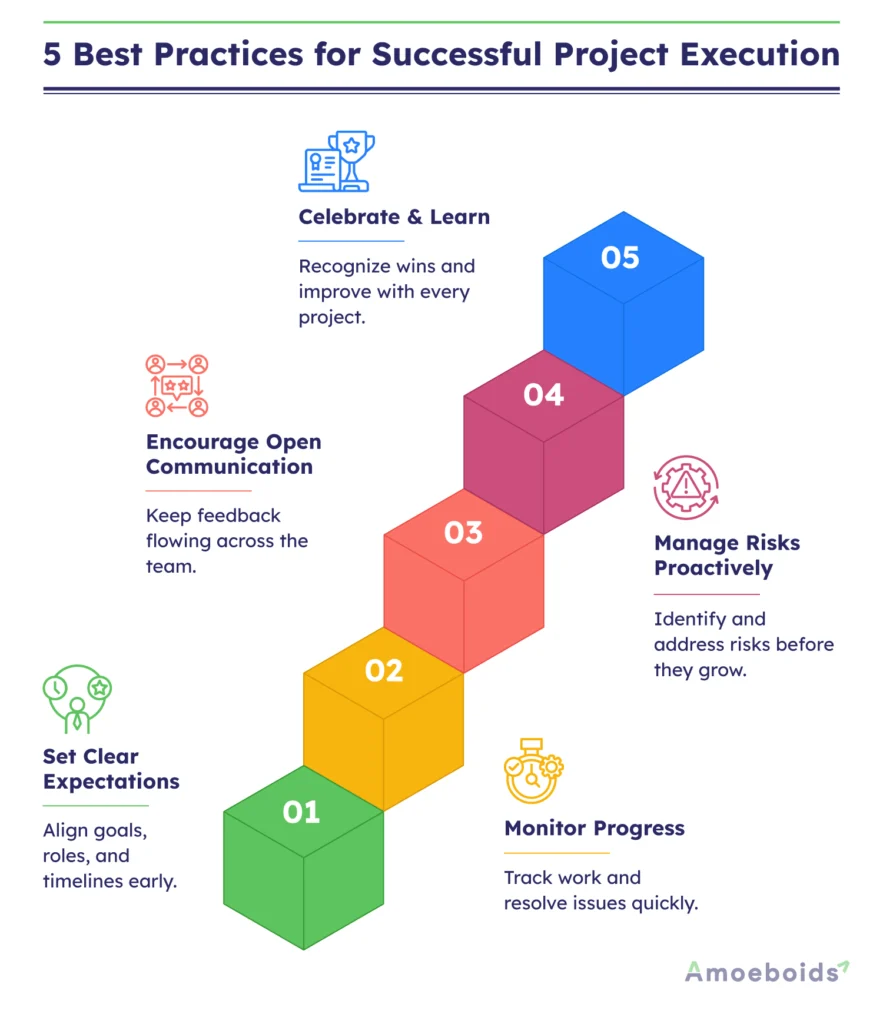
These best practices help teams achieve effective project execution while maintaining quality and consistency.
Set Clear Expectations from the Start:
Ensure that everyone involved understands the goals, responsibilities, and timelines. Clear expectations reduce miscommunication and allow teams to work with more confidence and direction.
Monitor Progress Regularly:
Checking progress regularly helps to find problems before they become big problems. Regular tracking helps teams to make changes when needed and stay aligned with the project’s goals.
Promote Open Communication:
Motivate team members and stakeholders to share their thoughts, concerns, and feedback openly. Clear communication builds trust and allows for better problem resolution.
Manage Risks Proactively:
Teams that anticipate potential issues are better able to respond quickly when problems occur. A proactive approach reduces disruptions and ensures that projects run smoothly.
Celebrate Milestones and Learn from Outcomes:
Acknowledging achievements keeps teams motivated and engaged throughout the project. Reviewing triumphs and challenges teaches valuable lessons for future project execution efforts.
Conclusion
Project planning is only half the story. A clearly laid out project execution strategy helps teams stay aligned, manage risks effectively, and deliver projects successfully. Without solid project execution, even the most detailed roadmap won’t get you far. You need structure, clear ownership, and a way to keep things moving across sprints. Whether it’s tackling scope creep, improving feedback loops, or refining your project execution plan, small adjustments can lead to significant improvements.
Investing time in proper project execution plan construction helps teams avoid confusion and execute projects more efficiently.
Teams that continuously refine their processes move closer to flawless project execution and stronger project outcomes. Companies that embrace agile project execution can respond more quickly to changing customer needs and market demands.
Try out the strategies we talked about here. Tweak your process. Fix the weak spots. And focus on making the execution phase smoother. That’s where the real wins are.
FAQs
Q. Difference Between Project Execution and Project Implementation?
Project execution involves putting the project plan into action, assigning tasks, managing progress, and ensuring that deliverables are completed. Project implementation, on the other hand, usually refers to deploying the final product or solution into a real-world environment where it can be used or adopted. A software development project with defined milestones and sprint schedules is a common project execution plan example.
Q. How to Ensure Successful Project Implementation?
Start by ensuring your team understands the overall goal, not just their tasks. Keep communication open during the transition, monitor early performance, and be prepared to address any gaps quickly once the product or feature is live. Reviewing an example of project execution plan can help teams understand how successful projects are structured and managed.
Q. Benefits of Streamlining Your Project Execution Phase?
Streamlining the project execution phase helps teams work more smoothly and reduce unnecessary delays. When your project execution phase runs smoothly, teams spend less time chasing status updates and more time building. It improves delivery speed, reduces rework, and builds trust, both within the team and with stakeholders.